Kauai’s Popular Pidgen and Hawaiian Terms For Visitors to Know
Published on: March 21, 2021 – 7:56 am
Pidgen language evolves when multiple cultures living in the same locale find ways to communicate. In the 1800’s and early 1900’s immigrants from Europe, the U.S., Asia, the Phillipines and the South Pacific immigrated to Hawai‘i. Over time, pidgen terms became common. Today the U.S. Census recognizes Hawaiian pidgen as an official language. It’s helpful to know some of the common common pidgen and Hawaiian language terms when visiting Kaua‘i, making it easier to understand the local dialect. Check out some more terms at the Go Ahead Website.
- Aloha — Hello or good bye. Deeper meaning; to exchange breath while standing in the same air space as another, with respect, empathy and compassion
- Aloha Kakaiaka (kah-ka-ee-a-kah — Good morning.
- Aloha awakea (ah-lo-ha ah-wah-keh-ah) if it’s between 10 a.m. and 2 p.m.
- Aoha ‘auinalā (ah-lo-ha ah-wee-nah-lah) if it’s between 2 p.m. to 6 p.m.
- Aloha aihiai (ah-loa-ha ah-hee ah-hee) — when you sit down to dinner together or at an gathering like a Hawaiian lū’au
- boddah you? – does it bother you
- bolo head – bald
- braddah – brother (not necessarily a relative)
- brah – short from of braddah
- broke da mouth (mout) – very delicious
- bumbye – awhile
- choke – a lot of something
- da – the
- da kine – the kind (when you can’t think of the word)
- dat – that
- dirty lickins – a spanking or beaten badly
- e kala mai (pronounced a- kah-lah mye), excuse me, forgive me, I’m sorry.
- eh?– don’t you know?
- faddah – father
- fo real – really, is it the truth?
- fo shua – for sure
- geev’ um – give it to them or go for it
- grind – eat enthusiastically
- hard rub – beaten badly
- Hawaiian time – late
- Heiau (hee-ee-ow), — temple or shrine and a place of historical significance requiring respect from all locals and visitors, Avoid sitting on stones, or playing inside the area.
- hemo (hay-mo) – remove
- ho brah! – prelude to something amazing.
- howzit? – how is everything, how’s it going, how are you?
- I no kea – I don’t care
- junk – not good
- keiki (kaykee) — child
- Kapu – keep out
- Kane – male
- k’den – OK then
- laters – good-bye
- like beef – do you want to fight?
- Mahalo — thank you, with meaning.
- Mahalo nui loa (nuee lo a) – thank you very much, with loving gratitude.
- mo’ bettah – better, preferred
- moke (mok) — a tough man
- muddah – mother
- no act – don’t exaggerate
- onoliscious – very delicious
- plenny – plentiful, a lot, more than enough
- poho – a waste of time
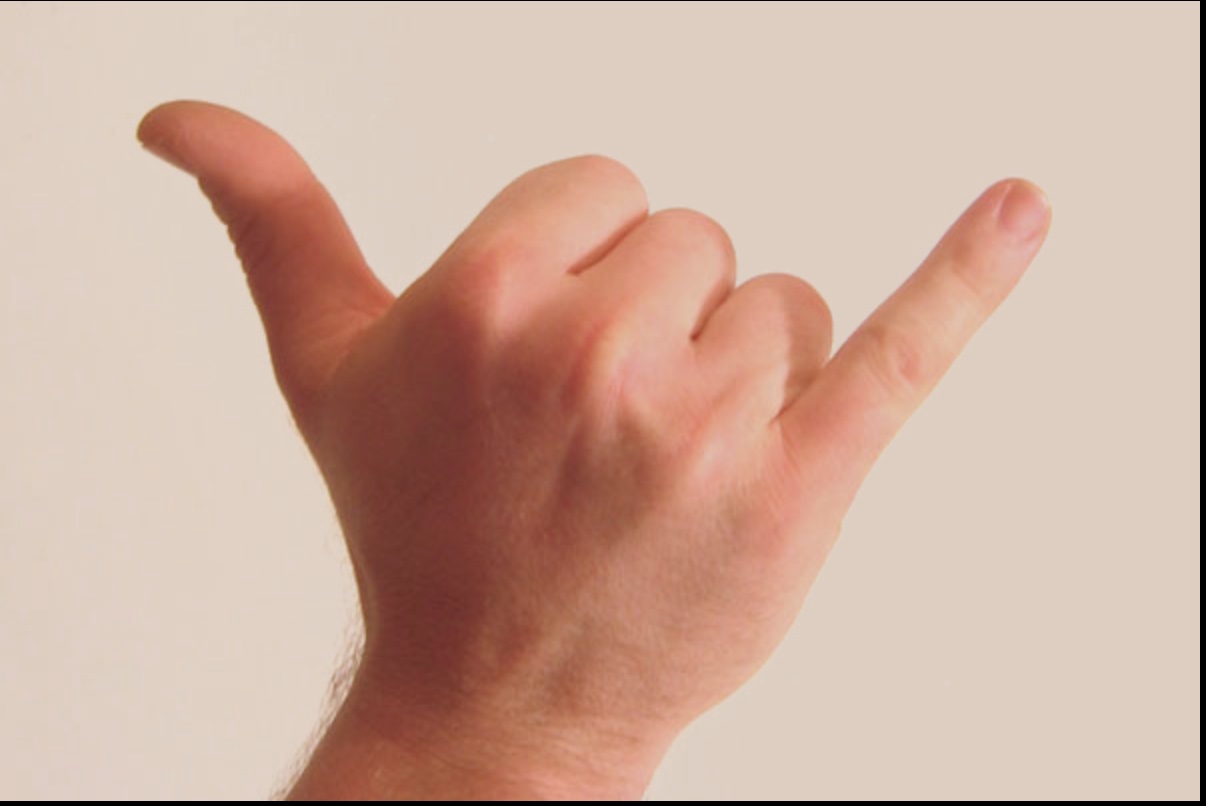
- shaka — a hand gesture where the thumb and little finger are extended outward from a closed fist, used when greeting or parting from someone or to express approval or solidarity.
- slippahs – slippers (flip-flops)
- sistah — sister (not necessarily a relative).
- talk stink – speak badly about someone.
- talk story – chat
- tita (tee-ta) – a tough woman
- try move – please move out of the way
- Wahine – femle
- we go – let’s leave, we’re leaving.
- you like? – do you like it, to you want, or would you like do something?